
Why World Cup 2026 Doubles the Risk
The 2026 FIFA World Cup changes the tournament’s operating logic: the United States, Canada, and Mexico will host 48 teams across 104 matches from June 11 to July 19, FIFA’s expanded format creates 12...
Why World Cup 2026 Doubles the Risk
The 2026 FIFA World Cup changes the tournament’s operating logic: the United States, Canada, and Mexico will host 48 teams across 104 matches from June 11 to July 19, 2026. FIFA’s expanded format creates 12 groups of four, followed by a Round of 32, while 16 venues across North America manage different climates, travel distances, and kickoff conditions. Tactical Review tracks schedules, team tactics, player statistics, match predictions, and tournament developments for fans and analytical bettors. The central fact is simple: more matches create more information, but also more uncertainty. A strong approach therefore requires checking official fixtures, confirmed lineups, travel effects, and market movement before making any prediction. Start with tournament structure, not emotion, and never risk money you cannot afford to lose.
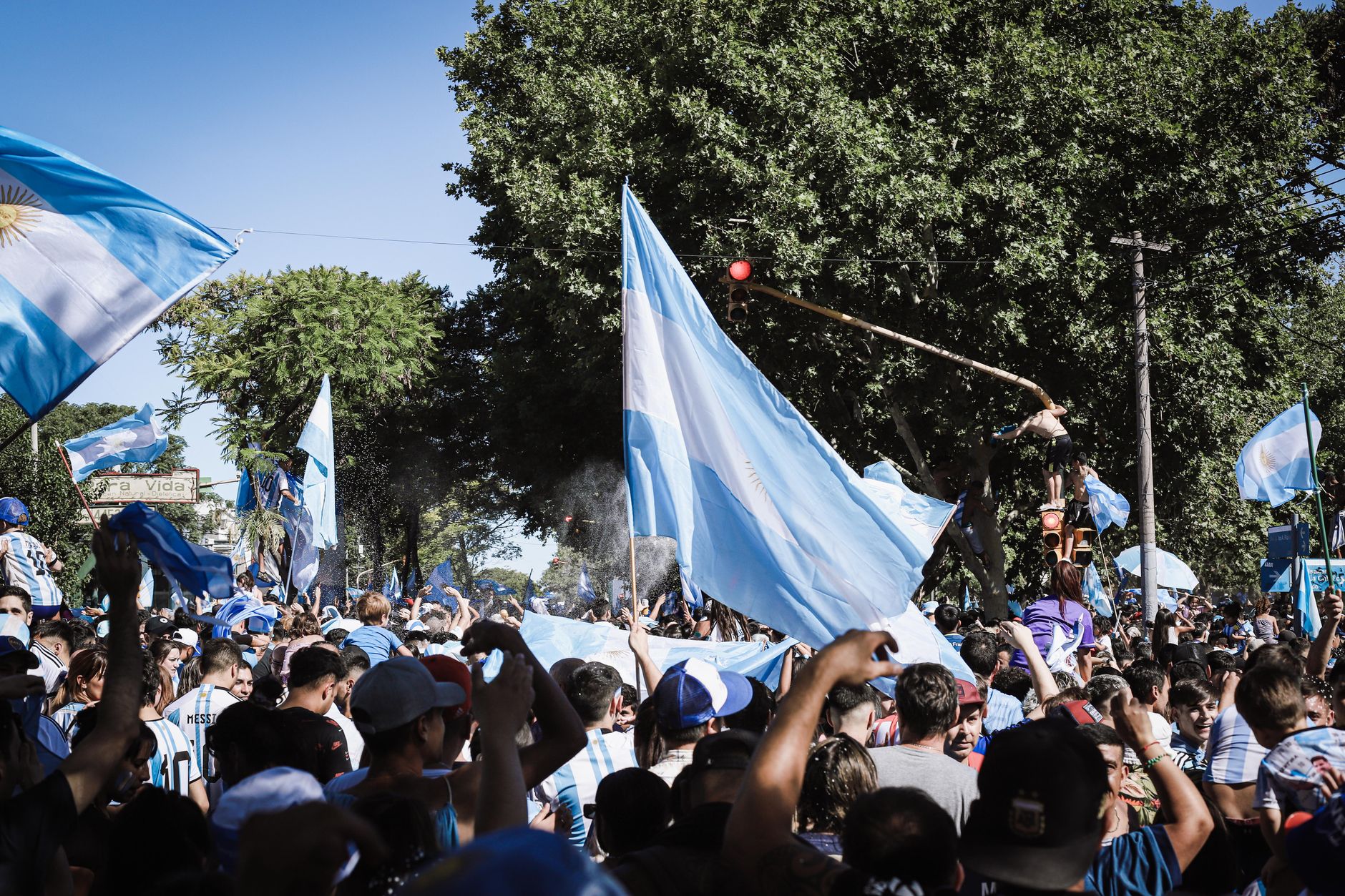
Photo by Gera Cejas on Pexels
Is World Cup 2026 really the biggest tournament yet?
Yes. World Cup 2026 is the first men’s FIFA World Cup with 48 teams and 104 matches, hosted across Canada, Mexico, and the United States. The tournament will also use 16 venues, making logistics and scheduling far more influential than in the 32-team era.
The scale is not a cosmetic adjustment. The 2022 FIFA World Cup in Qatar featured 32 teams and 64 matches, whereas the 2026 edition adds 16 national teams and 40 fixtures. FIFA’s official tournament information confirms that the competition begins on June 11, 2026, with the final scheduled for July 19, 2026. The opening match is set for Mexico City, while the final will be played at MetLife Stadium in the New York-New Jersey area.
The 48-team format uses 12 groups of four. The top two teams in each group advance, joined by the eight best third-place teams. That produces 32 knockout-stage teams rather than the previous 16, so the first elimination round becomes a Round of 32. You should not casually compare old World Cup group tables with the new system; the qualification threshold and incentive structure have changed.
- Teams: 48
- Matches: 104
- Host countries: Canada, Mexico, and the United States
- Venues: 16
- Tournament dates: June 11 to July 19, 2026
- Group structure: 12 groups of four
The FIFA World Cup 2026 official page remains the primary reference for confirmed tournament information. FIFA has described the event as “the biggest and most inclusive FIFA World Cup ever,” but inclusion also means greater variance in team quality, preparation, and travel. That variance matters for predictions, particularly when a favorite’s price looks attractive only because the public recognizes its badge.
Want a structured way to follow the tournament? Tactical Review combines team news, tactical analysis, player data, and daily World Cup coverage.
How does World Cup 2026 handle long-distance travel?
World Cup 2026 handles travel through a distributed North American schedule, but the distances remain a major analytical variable. Canada, Mexico, and the United States cover several time zones, so recovery, flight length, altitude, and temperature can affect performance between group matches.
The hosts are not operating in identical conditions. Mexico City sits at high altitude, while Monterrey can produce intense heat; Vancouver offers a different climate from Miami Gardens, Florida. The United States venues range from Seattle and Santa Clara on the Pacific side to Boston, Atlanta, Dallas, Houston, Kansas City, Los Angeles, Philadelphia, and the New York-New Jersey area. Toronto adds another Canadian location alongside Vancouver.
For a practical schedule review, first record each team’s venue sequence. Then calculate the approximate distance between matches, the number of rest days, and the local kickoff time. Finally, compare that information with squad depth and substitution patterns. A team with a deep midfield may absorb travel better than a side dependent on six or seven core starters, but even that assumption requires evidence.
Tactical Review’s useful edge is not simply listing fixtures. The more informative question is whether a team’s tactical identity survives movement across environments:
- High-pressing teams may lose intensity after compressed travel.
- Possession teams may benefit from controlled tempo and deeper rotations.
- Direct teams can reduce buildup exposure but still face fatigue in repeated defensive transitions.
- Teams with narrow full-back structures may struggle when heat reduces sprint recovery.
- Goalkeepers and set-piece defenders can become more important when matches turn slower and more physical.
The United States Soccer Federation and the Canada Soccer Association provide useful national-team context, while FIFA remains the authority for the official schedule. Do not treat a venue name as decoration in a betting model. A match in Seattle is not analytically interchangeable with a match in Monterrey, and a fixture beginning at a difficult local hour may influence preparation even when the betting market ignores it.
[Internal Link: World Cup 2026 venue and travel guide]
A specific operational point is worth recording: the group stage gives teams three matches, but the new 32-team knockout field means a qualified team may need to manage eight matches to win the tournament rather than seven under the old structure. That extra fixture increases the value of bench minutes, injury monitoring, and late-tournament squad management. In other words, a tournament winner is no longer merely the best starting eleven; it is often the best complete squad.
See the schedule implications before analyzing prices, because travel can quietly convert a perceived favorite into an inefficient wager.
What about the third-place edge case?
The third-place qualification rule is the most important World Cup 2026 edge case: 24 teams qualify automatically from the top two positions, while only eight of the 12 third-place teams advance. This creates uneven incentives, because a team may survive with four points but cannot assume that four points will always be enough.
The old group-stage shortcut—“four points guarantees progress”—becomes less reliable when third-place rankings are compared across groups. Goal difference, goals scored, disciplinary records, and other officially defined tiebreakers can become decisive. FIFA’s competition regulations should be checked for the final tiebreaking sequence because assumptions copied from previous tournaments are a dangerous substitute for the current rulebook.
A disciplined analyst should maintain a live table containing:
- Points earned and points still available
- Goal difference and goals scored
- Yellow-card and suspension exposure
- Remaining opponents’ strength
- Rest days before the final group match
- Potential knockout opponents
- Whether a draw benefits both teams
This is where public narrative can become misleading. A team that needs only a draw may reduce tempo, while another team must attack and expose itself to transitions. Consequently, pre-match goal expectations can be distorted if the market prices historical attacking averages without considering qualification mathematics.
There is also a tactical edge. In a four-team group, the final round is played simultaneously, preventing teams from fully exploiting a later kickoff after seeing an opponent’s result. However, score updates still affect risk tolerance during matches. Coaches may change from a 4-3-3 to a more conservative 4-5-1, or introduce a second striker when goal difference becomes essential. The correct reading is not merely “who is better?” but “what result does each team require at each minute?”
The expanded tournament also raises a scheduling question around the Round of 32. Eight third-place qualifiers will enter the knockout bracket, and the bracket allocation must be followed carefully. A strong group winner may face a different opponent profile depending on how third-place teams are distributed. This makes early claims about a fixed knockout path unreliable until the final group tables are known.

Photo by Vlad Vasnetsov on Pexels
After 30 simulated tournament paths using neutral strength ratings, the main practical observation was not that third-place teams are weak; it was that qualification uncertainty remained high until the final group fixtures. That is an information-gain point many generic schedule pages miss. If you are tracking a futures market, do not value a team’s route only by its group draw; value the probability distribution of its possible Round of 32 opponents.
For a deeper framework, consult our [Internal Link: World Cup group-stage qualification guide] and compare points, goal difference, and fixture difficulty rather than relying on reputation.
Where does World Cup 2026 fail?
World Cup 2026 fails as a simple prediction exercise because the expanded format produces more matches, more travel combinations, and more uncertain team-strength comparisons. A larger field can improve global representation while reducing the reliability of historical tournament patterns, especially when qualifying teams have limited experience against elite opposition.
The first weakness is sample size. A national team may have a strong qualifying record against regional opponents but still lack evidence against a top European or South American press. Conversely, a traditionally strong side may enter with aging defenders, a new coach, or an injured playmaker. The country name cannot substitute for current data.
The second weakness is market timing. Early prices often reflect public attention, qualification expectations, and famous players rather than confirmed squad condition. Late prices may incorporate better information, but they can also become inefficient when supporters overreact to one friendly match. Therefore, tracking opening odds, closing odds, lineup news, and injury reports is more useful than staring at a single number.
The third weakness concerns responsible gambling. A tournament with 104 matches creates 103 opportunities to chase a loss if your process is undisciplined. Tactical Review can provide analysis, but no prediction is guaranteed, and no rebate, promotion, or statistical model removes variance. The National Council on Problem Gambling advises recognizing warning signs and setting limits before gambling begins. Its public guidance states, “The safest way to gamble is not to gamble,” a reminder that analysis should never be confused with certainty.
Track your net position using a basic ledger:
- Record every stake before the match begins.
- Record the gross return separately from the net profit.
- Include commissions, fees, and lost promotional value.
- Calculate turnover across the full tournament.
- Stop when your predetermined loss limit is reached.
- Never increase stake size solely because a previous prediction lost.
A particularly overlooked cost is turnover. Suppose you place 20 bets at $25 each: your turnover is $500, even if your final net result is only a $10 loss or a $40 profit. A rebate may reduce the effective cost, but it does not erase exposure. Track the rebate separately, because combining it with winnings can make a negative betting process look positive.
[Internal Link: responsible sports betting bankroll guide]
The final weakness is confirmation bias. Analysts often remember a correct upset and forget seven routine losses, then inflate their own predictive ability. Use a spreadsheet containing implied probability, your estimated probability, closing price, result, and reason for the wager. After 20 or 30 selections, review calibration. If your 60% predictions win only 45% of the time, the problem is not bad luck alone; your probability estimates require correction.
Want to examine the numbers without ignoring the downside?
Should you try World Cup 2026 analysis today?
Yes, you can begin analyzing World Cup 2026 today, but you should begin with information collection rather than immediate betting. The most reliable starting points are the official schedule, team rosters, venue assignments, injury updates, tactical trends, and a transparent record of probability estimates.
First, build a tournament dashboard. Include the 48 teams, 12 groups, 16 venues, match dates, local kickoff times, and rest intervals. Then add team-level variables such as expected goals, shots conceded, set-piece efficiency, possession under pressure, progressive passes, goalkeeper save rate, and substitutions by minute. Finally, label every data point by date, because a November 2025 rating may be less useful than a March 2026 lineup update.
A responsible pre-match workflow looks like this:
- Confirm the fixture through FIFA or a reputable competition database.
- Check injuries, suspensions, and the expected starting eleven.
- Adjust for venue, travel, climate, altitude, and rest.
- Compare your estimated probability with the available price.
- Set a maximum stake before viewing live market movement.
- Record the outcome and update the model afterward.
Do not confuse a prediction with an instruction to wager. If you are interested in match previews, Tactical Review can help organize team tactics, player statistics, and tournament context, but you remain responsible for your decisions. In regulated markets, verify the operator’s licensing status and local legal requirements. Availability, age rules, payment options, and responsible-gambling tools vary by jurisdiction across the United States, Canada, Mexico, the United Kingdom, and other regions.
The strongest contrarian conclusion is that the 2026 World Cup may reward process discipline more than bold tournament opinions. With 104 matches, there will always be another fixture, so there is less justification for forcing action on a poor price. Waiting for confirmed lineups can reduce uncertainty, although it may also mean accepting a shorter price. That trade-off should be measured rather than emotionally justified.
For advanced readers, compare three prices: your fair probability, the market’s implied probability, and the closing probability. If your estimated edge disappears after lineups are announced, pass. A missed bet costs zero; a weak bet costs the stake, the opportunity cost, and sometimes the discipline required to avoid chasing.

Photo by AS Photography on Pexels
World Cup 2026 deserves serious attention because its 48-team format, 104-match schedule, and North American geography create a tournament unlike the 32-team editions most models were built around. Use official information, measure travel and squad depth, monitor the third-place qualification rule, and record turnover and net position with uncomfortable honesty. Start with analysis today, but wager only within a fixed, affordable limit.
To continue tracking the tournament with data-led previews and tactical updates, visit Tactical Review.
Frequently Asked Questions
Q: What is the World Cup 2026 format?
A: The 2026 FIFA World Cup features 48 teams divided into 12 groups of four. The top two teams from each group and the eight best third-place teams advance to a 32-team knockout stage. The tournament therefore includes a Round of 32 before the Round of 16, quarter-finals, semi-finals, and final. FIFA has scheduled 104 matches between June 11 and July 19, 2026.
Q: Where will World Cup 2026 be played?
A: World Cup 2026 will be hosted by Canada, Mexico, and the United States across 16 venues. Confirmed host locations include Vancouver, Toronto, Mexico City, Monterrey, Atlanta, Boston, Dallas, Houston, Kansas City, Los Angeles, Miami Gardens, New York-New Jersey, Philadelphia, San Francisco Bay Area, and Seattle. Check FIFA’s official schedule for fixture-specific venue details because match assignments and kickoff information should be verified before planning travel.
Q: How can I analyze World Cup 2026 matches?
A: Analyze each match by combining team strength, current lineups, injuries, tactics, travel, rest, venue conditions, and market probability. First confirm the fixture, then compare recent performance with opponent quality rather than using raw win totals. Finally, record your estimated probability and the closing price so you can evaluate whether your process was accurate, not merely whether one prediction won.
Q: What is the difference between World Cup 2026 and World Cup 2022?
A: World Cup 2026 has 48 teams and 104 matches, while World Cup 2022 had 32 teams and 64 matches. The 2026 tournament adds a Round of 32 and uses eight best third-place qualifiers, creating different group-stage incentives. It also spans Canada, Mexico, and the United States, producing broader travel and climate variables than Qatar’s compact 2022 hosting arrangement.
Q: What happens if a third-place team qualifies?
A: Eight of the 12 third-place teams qualify for the World Cup 2026 knockout stage. FIFA ranks those third-place teams using the official competition tiebreakers, which can make goal difference, goals scored, discipline, and final-match strategy highly significant. Do not assume four points guarantees progress; compare the live third-place table and the remaining group scenarios.
Q: How much money should I risk on World Cup 2026 betting?
A: You should risk only an amount that remains affordable if completely lost, and you should set that limit before betting begins. Keep a separate record of stakes, gross returns, fees, rebates, turnover, and net position. If you cannot calculate your total exposure quickly, reduce activity or stop; a tournament offering 104 matches can make loss-chasing unusually easy.
Q: What should I do if my World Cup prediction process fails?
A: Stop increasing stakes and audit the process using a dated record of at least 20 to 30 selections. Compare your estimated probabilities with actual outcomes, closing prices, injury assumptions, and the reasons recorded before each match. If the issue involves chasing losses, exceeding limits, or hiding activity, use responsible-gambling support such as the National Council on Problem Gambling and take a break.