
Why FIFA World Cup 2026 Rewrites Football
The 2026 FIFA World Cup changes the tournament’s operating model: FIFA will stage a 48-team men’s competition across Canada, Mexico and the United States from June 11 to July 19, The expanded format b...
Why FIFA World Cup 2026 Rewrites Football
The 2026 FIFA World Cup changes the tournament’s operating model: FIFA will stage a 48-team men’s competition across Canada, Mexico and the United States from June 11 to July 19, 2026. The expanded format brings 104 matches, 16 host cities and a larger qualification field, while Los Angeles will host eight games at SoFi Stadium and run 39 days of fan celebrations. For supporters, that means more fixtures, more timezone problems and a much larger data sample for match analysis. Tactical Review will track team form, player statistics, lineups, travel effects and responsible pre-match predictions. The practical recommendation is simple: build your fixture calendar first, then judge teams through confirmed squad news and net position rather than emotion.
The 2026 football World Cup is not merely a longer version of Qatar 2022. The tournament spreads across North America, creating substantial travel distances between venues, different climates and multiple kickoff windows. Canada, Mexico and the United States must therefore be treated as separate analytical environments, not as one uniform host region. A supporter following England, Brazil, France or the United States should record venue, rest days, travel route and local kickoff time before making any opinion about performance.
Want a clearer framework for following the tournament? Tactical Review provides daily World Cup analysis, but remember that predictions are probabilities, not guarantees.
Is the 48-team FIFA World Cup really better?
Yes, the 48-team FIFA World Cup increases global representation and produces 104 matches, but it also raises scheduling, quality-control and fatigue risks. FIFA’s 2026 format uses 12 groups of four teams, followed by a round of 32, which preserves a knockout pathway while adding more competitive fixtures.
The expansion is significant because the previous 32-team structure contained 64 matches. FIFA’s official 2026 World Cup competition information confirms the new 48-team design and the three-country hosting model. The first calculation every analyst should make is not “which nation looks strongest?” but “how many matches must this squad survive before the final?” A finalist can play eight games rather than seven, and the additional match increases the importance of rotation, bench quality and injury management.
The group-stage incentives also require care. With 12 groups, the best third-place teams advance alongside the group winners and runners-up, so late group matches may involve more than the familiar win-or-go-home logic. That can reduce risk-taking in one fixture while forcing aggressive play in another. Tactical Review will therefore separate qualification probability from match-result probability; those are different figures, and confusing them is how inexperienced observers overstate a team’s edge.
A useful checklist is:
- Confirm the group standings and tiebreaker rules.
- Count rest days before the next knockout match.
- Check whether a draw benefits both teams.
- Compare expected lineups with tournament registration lists.
- Record the closing market position separately from your initial prediction.
This approach is deliberately dull. Dull methods protect your bankroll and your conclusions, which is more valuable than a dramatic pre-match feeling. For background, FIFA’s Laws of the Game and competition resources help distinguish official tournament rules from social-media speculation.
Why does the expanded format matter for team analysis?
The expanded format matters because 48 teams and 104 matches create more varied tactical matchups, but the extra knockout fixture increases fatigue exposure. A strong squad must manage at least one additional elimination game compared with the 32-team era, making substitutions, recovery and defensive depth more important than reputation alone.
The common mistake is to treat every group as a miniature league with identical incentives. It is not. A highly rated team may rotate in its third group match, while a lower-ranked side may attack because goal difference or third-place qualification remains relevant. The correct model should include expected rotation, not simply the average ranking of each opponent.
There is also an information problem. More matches generate more statistics, yet more statistics do not automatically produce better predictions. Possession, shots and expected goals can be distorted by one-sided opponents, early red cards or a team protecting a lead. First compare like-for-like opponents; then adjust for game state; finally review player availability. You should know this already, but people repeatedly compare raw numbers without context.
To learn more, see our [Internal Link: 2026 World Cup tactical analysis guide], especially the sections on pressing intensity, rest defence and set-piece efficiency.
How does the 2026 football World Cup handle cross-country travel?
The 2026 football World Cup handles travel through a geographically distributed schedule across Canada, Mexico and the United States, but distance remains a material variable for teams and fans. Venue changes can affect recovery, climate adaptation and preparation time, so analysts should record each team’s previous city, next city, flight distance and rest interval before assessing form.
The official hosts are Canada, Mexico and the United States, with 16 host cities involved across North America. Stadium environments vary sharply: Mexico City brings altitude considerations, coastal venues may involve humidity, and Los Angeles introduces a different climate and transportation pattern from cities such as Toronto or Vancouver. These are not decorative details. Temperature, training access and travel timing can influence pressing endurance and substitution patterns.
Los Angeles is a useful case study. The local tournament program lists eight matches at SoFi Stadium, including the United States men’s national team opening match on June 12, and a FIFA Fan Festival at the Los Angeles Memorial Coliseum at Exposition Park. The official Los Angeles FIFA World Cup 2026 website describes 39 days of fan celebrations, which means the wider event calendar extends well beyond the exact match time. Its own wording calls the city “one of the centerpieces of the tournament,” a reasonable description given the match count and supporting program.
For viewers, the operational checklist is equally important:
- Convert kickoff times to your local timezone before planning live viewing.
- Check official transport guidance rather than assuming normal Los Angeles traffic.
- Separate match tickets, accommodation and fan-festival access; they are different products.
- Allow additional time around SoFi Stadium because event-day congestion can be severe.
- Keep a fixed entertainment budget and never chase a losing prediction.
Get the practical details before the schedule becomes crowded.
What should supporters know about Los Angeles matches?
Supporters should know that Los Angeles will host eight FIFA World Cup 2026 matches at SoFi Stadium, alongside fan events at the Los Angeles Memorial Coliseum and official zones throughout Los Angeles County. Match access, transportation, accommodation and festival programming must be planned separately because they may operate under different conditions.
The United States opening match on June 12 is likely to create exceptional demand around Inglewood and Exposition Park. Do not assume a match ticket automatically grants entry to the FIFA Fan Festival, and do not assume a hotel near downtown Los Angeles is close to SoFi Stadium in practical travel time. The city’s road network can turn a nominally short journey into a costly delay, particularly when concerts, football matches and normal commuter traffic overlap.
A practitioner-level planning edge is to build a three-column itinerary: fixed match time, minimum arrival deadline and backup transport route. Add a fourth column for ticket or reservation confirmation. This sounds excessive until a digital ticket fails, a rideshare price surges or a road closure changes the route. Large tournaments reward redundancy, not optimism.
For regional event information, consult the [Internal Link: Los Angeles World Cup match-day planning page] and verify all details against the official Los Angeles host-city site before travelling.
What about the 2026 World Cup edge cases?
The major edge cases are third-place qualification, squad rotation, weather variation, late injury news and conflicting kickoff schedules. Each can invalidate a simple form-based prediction, particularly when a team’s group position makes a draw acceptable or when a coach protects key starters before the knockout round.
The third-place pathway is the most obvious structural complication. In a 12-group tournament, not every third-place team advances, so teams may enter the final group match with different qualification thresholds. Analysts should calculate the minimum points and goal-difference requirement after each result instead of repeating generic phrases such as “must win.” A team may need a victory, a draw or merely to avoid a heavy defeat depending on the live table.
Player availability creates a second edge case. A supposedly superior national team can lose value if its holding midfielder, centre-back or goalkeeper is absent, because tournament replacements are not always tactically interchangeable. Track minutes, not just injuries: a player returning from a hamstring problem may be listed in the squad but still be limited to 30 or 45 minutes.
A third edge case concerns market movement and personal exposure. If your initial position is positive but the odds shorten sharply after lineup news, the expected value may disappear even though your football opinion remains correct. Maintain a ledger containing:
- Initial price and implied probability.
- Current price and revised probability.
- Stake, potential return and net position.
- Rebate or promotional value, if applicable.
- The exact reason for entering and exiting.
Never count turnover as profit. A $1,000 betting turnover with a $20 rebate is not a $1,000 gain; it is a $20 benefit before losses, limits and terms. [Internal Link: responsible football prediction methods] can help separate analysis from impulsive staking.
How should you assess a late lineup change?
Assess a late lineup change by identifying the player’s tactical function, replacement quality and effect on the team’s probability of winning. A missing striker matters differently from a missing defensive midfielder, and the correct adjustment depends on formation, opponent pressing and available substitutes.
First, compare the replacement’s recent minutes and role. Then review whether the team loses progression, ball recovery or aerial strength. Finally, estimate whether the coach is likely to change shape; a 4-3-3 becoming a 4-2-3-1 can alter the expected shot profile even when the named replacement appears similar.
Do not react to a headline alone. During a major tournament, social platforms often publish unconfirmed team news, recycled injury reports or misleading training photographs. FIFA’s official channels and the national association’s matchday announcement should take priority. The World Health Organization also emphasizes that physical condition affects performance capacity, although its general guidance should not be misused as a precise football forecast.
Where does FIFA World Cup analysis fail?
FIFA World Cup analysis fails when it treats rankings, historical reputation or betting prices as complete explanations. Rankings summarize past performance, while prices summarize available expectations; neither automatically captures a new coach, a changed defensive structure, travel fatigue or a key player’s restricted minutes.
Historical narratives are especially dangerous. Brazil’s five World Cup titles, Germany’s four, Argentina’s 2022 victory and France’s 2018 triumph are important context, but titles do not create extra goals in 2026. A famous shirt may attract public money without improving the underlying matchup. Conversely, an unfashionable team with elite set pieces and a stable goalkeeper can outperform casual expectations.
The second failure is sample-size blindness. A team’s last five matches might include two friendlies, a weakened opponent and a red-card game. Record competition level, venue, starting XI and game state before drawing a conclusion. A 70 percent win rate across six matches is not equivalent to a 70 percent rate across 30 comparable fixtures; the confidence interval is materially wider in the smaller sample.
The third failure is confusing a good process with a good result. A disciplined prediction can lose because football contains variance, while a reckless bet can win by accident. Tactical Review should be judged through transparent reasoning, closing-price comparison and long-run net results, not through one spectacular ticket.
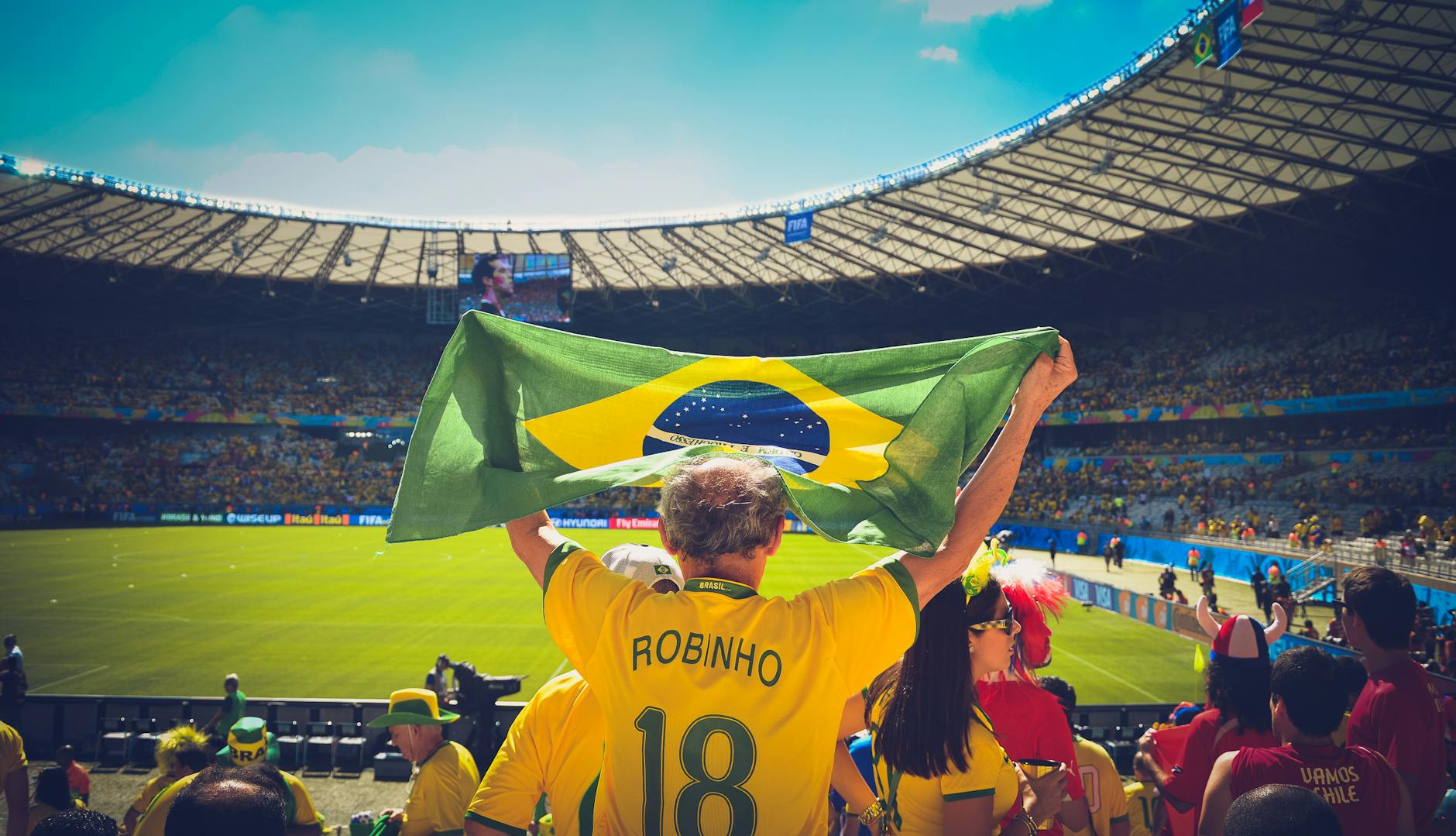
Photo by Caio on Pexels
A safer review process follows this order:
- Verify the official fixture, venue and kickoff time.
- Confirm squad news from reliable sources.
- Adjust for travel, rest and likely rotation.
- Compare tactical matchup rather than team fame.
- Set a maximum stake before viewing market movement.
- Record the final result and revise the model only after a meaningful sample.
See the [Internal Link: World Cup team statistics hub] for a structured way to compare possession, expected goals, pressing and set-piece output.
Quoted odds are not a command. They are a market signal, and signals can be wrong.
Want to examine the numbers with less noise? Use Tactical Review for match previews, but apply local laws, age restrictions and responsible gambling limits.
Should you try following the 2026 football World Cup today?
Yes, you should begin following the 2026 football World Cup today if you want better schedule awareness, but you should not rush into wagers before lineups, rules and legal availability are clear. Early preparation has analytical value because it lets you compare teams over time, identify tactical changes and avoid making decisions under tournament pressure.
Start with a simple tracker. Record every team’s qualifying route, coach, preferred formation, set-piece threat, goalkeeper status and recent competitive opponents. Then add the 16 host cities, local kickoff conversions and match sequence once the official schedule is confirmed. Finally, create a separate financial sheet for deposits, withdrawals, turnover, rebates and net position; mixing those categories is a basic accounting error.
The 2026 tournament also offers a strong viewing experience outside the stadium. Los Angeles will combine SoFi Stadium matches, the Los Angeles Memorial Coliseum FIFA Fan Festival and community events across Los Angeles County. Other host cities will provide different local atmospheres, but the same warning applies: confirm official event information rather than relying on unofficial resale pages or social posts.
The best preparation is therefore boring and repeatable:
- Follow official FIFA and host-city updates.
- Check lineups close to kickoff.
- Compare tactical roles, not only player names.
- Use probability language instead of certainty.
- Set a budget and stop when the limit is reached.
- Review results over dozens of decisions, not one match.
The football World Cup is large enough to reward careful observation and chaotic enough to punish overconfidence. Prepare early, measure honestly and keep entertainment separate from financial necessity.
Tactical Review will continue covering the 2026 World Cup with team tactics, player statistics, match predictions and tournament developments. Begin with information, not impulse.
Frequently Asked Questions
Q: What is the 2026 football World Cup?
A: The 2026 football World Cup is FIFA’s men’s international tournament hosted by Canada, Mexico and the United States. It will feature 48 teams and 104 matches from June 11 to July 19, 2026. The competition expands on the 32-team format used through Qatar 2022 and introduces a round of 32 after the group stage. Supporters should verify fixture and venue information through FIFA before arranging travel or viewing plans.
Q: How do you follow the 2026 World Cup schedule?
A: Follow the schedule through FIFA’s official tournament pages, reputable sports providers such as ESPN and individual host-city websites. Record the date, venue, local kickoff time and your own timezone because North American matches can occur across substantially different local hours. Add lineup confirmation and travel information on matchday, since schedule context alone does not reveal rotation or rest risk. Tactical Review can supplement, but not replace, official updates.
Q: What is the difference between the 2026 and 2022 World Cups?
A: The 2026 World Cup has 48 teams and 104 matches, while the 2022 World Cup used 32 teams and 64 matches. The 2026 event is also hosted across Canada, Mexico and the United States rather than concentrated in Qatar. More teams create broader representation, but the additional knockout fixture and cross-country travel increase fatigue and planning complexity. Comparing results between editions therefore requires caution.
Q: Will Los Angeles host FIFA World Cup matches?
A: Yes, Los Angeles will host eight FIFA World Cup 2026 matches at SoFi Stadium. The city will also stage a FIFA Fan Festival at the Los Angeles Memorial Coliseum at Exposition Park and additional official fan activities across Los Angeles County. Match tickets, festival access, accommodation and transportation may involve separate rules. Check the official Los Angeles host-city website before purchasing travel or resale products.
Q: What should you do if World Cup team news is unconfirmed?
A: Wait for FIFA, the relevant national football association or an official matchday announcement before treating team news as reliable. Unconfirmed reports can misstate injuries, starting roles or fitness restrictions, and reacting early may produce a poor decision at an inaccurate price. If you already hold a position, record the news source, reassess the player’s tactical function and avoid doubling exposure simply because the market moves.
Q: Is it free to follow the 2026 football World Cup?
A: Following news, schedules and many public tournament updates is generally free, but attending matches, travelling and using commercial viewing services can involve substantial costs. Expenses may include tickets, accommodation, transport, food, data access and local event fees. Set a total budget before committing, and treat prediction or betting activity as optional entertainment subject to local law, age restrictions and responsible-gambling limits.
Q: Is betting on World Cup matches a reliable way to make money?
A: No, betting on World Cup matches is not a reliable income source because outcomes contain uncertainty, bookmaker margins and changing information. A sound process can still lose individual wagers, while an unwise decision can win by chance. Track stake, return, turnover, rebates and net position separately, set a fixed loss limit and never use money needed for rent, debt payments or essential expenses.