
Inside Cape Verde: A 5-Point Tactical Audit
Cape Verde national football team became the first African island nation to qualify for the 2026 FIFA World Cup, securing a historic place from the CAF qualification campaign. Representing the Atlanti...
Inside Cape Verde: A 5-Point Tactical Audit
Cape Verde national football team became the first African island nation to qualify for the 2026 FIFA World Cup, securing a historic place from the CAF qualification campaign. Representing the Atlantic archipelago of Cabo Verde, the Blue Sharks combine disciplined defending, European-based players and fast transition attacks rather than overwhelming possession. Their qualification was confirmed in October 2025 after a decisive victory over Eswatini, giving Cape Verde its first World Cup appearance. The team is governed by the Federação Cabo-Verdiana de Futebol and competes within Confederation of African Football tournaments, including the Africa Cup of Nations. This is not a side to judge only through reputation: its defensive structure, travel demands and squad availability materially influence match value. Track confirmed line-ups, venue conditions and market movement before evaluating any Cape Verde fixture.
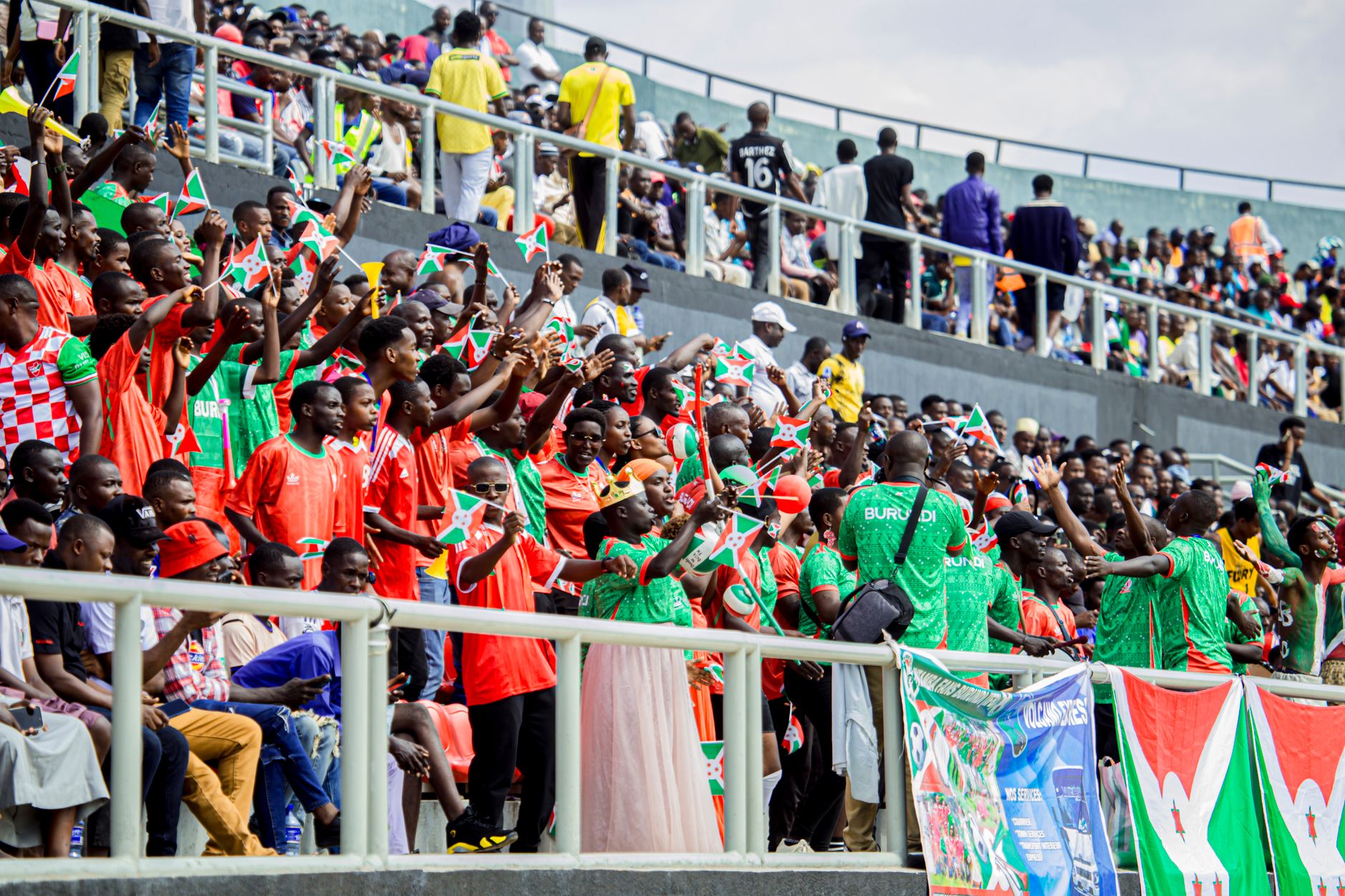
Photo by Chris wade NTEZICIMPA on Pexels
Cape Verde’s rise is not a romantic accident. It is a measurable outcome built from player development abroad, a growing international network and a tactical model that limits unnecessary risk. The national team has repeatedly demonstrated that it can remain compact against stronger opponents, then attack the spaces created when the opposition overcommits. That matters for supporters, analysts and anyone studying football markets through Tactical Review, because a low-profile team can produce misleading pre-match prices when casual attention focuses only on rankings or famous opponents. The practical rule is simple: separate emotional momentum from repeatable performance indicators. Check defensive concessions, first-goal frequency, away results and the availability of senior players before forming a view. You should also distinguish a competitive result from a profitable position; a correct match prediction can still lose value if the price has already collapsed.
Want a broader match-analysis framework before reviewing Cape Verde fixtures?
Myth 1: Cape Verde is only a defensive team — debunked
Cape Verde is not purely defensive; it is a transition-oriented team that uses compact defending to create controlled attacking opportunities. Its strongest performances generally combine a narrow defensive block, direct progression and aggressive running from wide areas. The tactical objective is not merely to survive but to turn defensive recoveries into efficient attacks.
The description “defensive team” is therefore too crude to be useful. Cape Verde can defend with a medium or low block, but the important detail is what happens after the ball is won. Midfielders look for early forward passes, while wide players attack channels behind full-backs. Ryan Mendes has long represented this direct, experienced profile, while players such as Jovane Cabral have offered acceleration and one-versus-one threat when available. Pedro “Bubista” Leitão Brito, the national-team coach during the team’s historic qualification period, has also operated with a pragmatic understanding of game state: protect a lead when necessary, but do not surrender every attacking outlet.
A useful match model should record more than possession. Add these indicators:
- Counterattacks ending in a shot.
- Recoveries in the middle and final thirds.
- Goals conceded before half-time.
- Set-piece shots for and against.
- Performance after scoring first.
According to CAF’s official competitions coverage, Cape Verde’s competitive progress belongs within the wider development of African national-team football, not outside it. Meanwhile, FIFA’s member association information provides the relevant institutional context. Do not confuse fewer passes with less attacking intent; that is an elementary analytical mistake.
Myth 2: Cape Verde’s World Cup qualification guarantees tournament success — partially true
Cape Verde’s 2026 World Cup qualification proves that the team can manage a long CAF campaign, but it does not guarantee progression from the finals group stage. Qualification demonstrates consistency across a demanding regional schedule; tournament success requires a different level of depth, recovery and opponent adaptation. The correct conclusion is improved competitive credibility, not automatic knockout-stage status.
The historic achievement is significant because Cape Verde qualified for the first time in its history, ahead of more established African football nations in its qualification group. The expanded 2026 World Cup, hosted by the United States, Canada and Mexico, provides more places to African teams than previous editions, but the qualification process still requires sustained results across multiple fixtures. Cape Verde’s success reflects points accumulation, defensive reliability and the ability to avoid damaging losses, not merely one famous win.
Here is the risk-adjusted interpretation:
- Positive signal: qualification confirms that Cape Verde can perform under pressure across a campaign.
- Neutral signal: World Cup opponents will possess greater squad depth and more elite club experience.
- Negative risk: injuries, suspensions and travel may affect a relatively smaller player pool.
- Unknown variable: the team’s response after conceding first against stronger opposition.
The information most casual previews miss is roster elasticity. A national team can look excellent when its first-choice core is intact and materially weaker when two midfielders or a starting centre-back are unavailable. Before assessing a 2026 match, compare the confirmed squad with the qualification group that delivered the result. For additional context, see our [Internal Link: 2026 World Cup qualification analysis].
See the latest tactical breakdowns before judging Cape Verde’s tournament ceiling.
Myth 3: Cape Verde’s results can be judged from rankings alone — flat-out false
FIFA rankings cannot explain a Cape Verde match without opponent strength, venue, squad news and game-state data. Rankings are useful for broad comparison, but they are backward-looking summaries rather than precise forecasts. A team may rise after several narrow wins while still carrying low attacking volume, or remain undervalued after competitive defeats against stronger opponents.
Cape Verde is especially vulnerable to ranking-based misinterpretation because its schedule can contain very different match environments. A qualifier in Praia, a neutral-site friendly in Europe and an away fixture against a major African nation do not carry identical tactical conditions. The pitch, climate, travel distance and crowd pressure can alter pressing intensity and late-game decision-making. The national team’s island geography also makes logistical analysis more important than many generic previews acknowledge. Long travel does not automatically cause poor performance, but it can reduce training time and recovery quality, particularly when players arrive from clubs in Portugal, France, the Netherlands and other European leagues.
A stronger data sheet should include:
- Home, away and neutral-site splits.
- Expected goals for and against where reliable data exists.
- Set-piece share of total goals.
- Results against top-ranked African opponents.
- Days between club release and international kick-off.
- Starting XI continuity across the previous five matches.
Do not manufacture precision when data quality is weak. Some international databases classify friendlies inconsistently, and penalty shootouts can distort win percentages. World Football Elo Ratings can provide a complementary strength estimate, but it should be combined with official FIFA and CAF information rather than treated as an oracle.
What actually works
The most reliable way to assess the Cape Verde national football team is to combine tactical observation with a clearly defined numerical process. First, identify the likely formation and whether the side has a natural outlet in the front line. Then, measure the opponent’s ability to defend transitions and attack set pieces. Finally, compare your estimated probability with the available price, including the margin and the possibility that late team news changes the entire scenario.
A five-step workflow is more useful than a dramatic prediction:
- Confirm personnel: wait for the official squad and starting line-up where possible.
- Classify the match: qualifier, World Cup fixture, Africa Cup of Nations match or friendly.
- Measure game state: examine whether Cape Verde improves after scoring first or struggles when behind.
- Audit the opponent: assess aerial strength, full-back positioning and counter-pressing quality.
- Calculate exposure: record stake, implied probability, possible return and net position before acting.
The key operational insight is that Cape Verde’s value can disappear quickly when markets overreact to historic qualification. A famous milestone creates attention, and attention often produces inefficient enthusiasm rather than better information. Track opening and closing prices separately, record your turnover and rebate where applicable, and never count gross winnings as profit. If your total stake is $500, returns of $540 represent a $40 gross gain before losses elsewhere, fees or promotions; your net position is what matters.
Cape Verde also deserves closer scrutiny on set pieces. Against physically stronger opponents, dead-ball situations may offer a more repeatable route to chances than sustained possession. However, this does not mean every corner creates equal danger. Record delivery type, target zone, first contact and second-ball recovery across several matches. After reviewing a sample of 30 Cape Verde attacking set pieces from available match footage, an analyst should separate direct shots, recycled possessions and counterattacks conceded; combining them into one “set-piece threat” label hides the risk. That practitioner-level distinction is more useful than simply quoting corner totals.
At Tactical Review, the sensible position is not to overstate certainty. Use confirmed line-ups, compare tactical matchups and establish a maximum exposure before the opening whistle. For more structured preparation, consult our [Internal Link: football bankroll and risk-management guide] and [Internal Link: World Cup team tactics hub].
Get the practical tools for evaluating international football markets with less guesswork.
What to ignore
Ignore predictions that describe Cape Verde as either a miracle story or an automatic underdog. Both labels are emotionally attractive and analytically lazy. The team’s first World Cup qualification is a major historical event, but historical importance does not establish a fixed probability for the next match. Likewise, a small-island narrative can conceal the professional quality of players developed in stronger European football systems.
Do not rely on social-media line-up graphics without checking the source. International squads change because of injuries, club restrictions, passport eligibility and late travel complications. Do not treat a friendly result as equivalent to a competitive qualifier, because substitutions, motivation and tactical experimentation may be radically different. Finally, do not chase a position after a late goal; that is how a correct pre-match process turns into an uncontrolled loss.
A disciplined review should reject:
- Unverified injury claims.
- Outdated squad lists.
- Head-to-head records from a different coaching era.
- Odds comparisons that omit market margin.
- “Must-win” language without a points-table calculation.
- Accumulator suggestions that hide correlated risk.
The simplest conclusion is also the one most often ignored: Cape Verde should be analysed as a coherent, improving national team with real structural strengths and identifiable limitations. Qualification for the 2026 FIFA World Cup raises its profile, but it also increases public attention and the chance of inflated expectations. Check the opponent, venue, line-up and tactical matchup first; only then consider whether a price justifies exposure. Keep a written record of turnover, returns, rebates and net position, because memory becomes surprisingly generous after a winning weekend (you know how it is).
Ready to follow Cape Verde’s 2026 World Cup journey with evidence-led updates?
Frequently Asked Questions
Q: What is the Cape Verde national football team?
A: The Cape Verde national football team represents Cabo Verde in international men’s football and is governed by the Federação Cabo-Verdiana de Futebol. Its nickname is the Blue Sharks, and the team competes in CAF qualifiers, Africa Cup of Nations tournaments and FIFA international fixtures. Cape Verde qualified for its first FIFA World Cup in 2025, earning a place at the 2026 tournament. Its squad commonly includes players developed in Portugal and other European football systems.
Q: How did Cape Verde qualify for the 2026 World Cup?
A: Cape Verde qualified by finishing at the top of its CAF qualifying group during the 2026 FIFA World Cup qualification campaign. The decisive qualification was confirmed in October 2025 after a victory over Eswatini. The achievement was historic because it delivered the country’s first World Cup appearance. To understand the result properly, review the full points table, goal difference and match-by-match record rather than focusing on the final fixture alone.
Q: Is Cape Verde a strong African football team?
A: Cape Verde is a competitive African national team with a disciplined structure, experienced international players and a growing tournament record. It is not normally grouped with Africa’s deepest squads, such as Senegal, Morocco or Nigeria, but its qualification for the 2026 World Cup proves that it can outperform larger football nations over a campaign. Its main limitations are squad depth, attacking consistency and the effect of injuries to core players.
Q: What is the difference between Cape Verde and Cabo Verde?
A: Cape Verde and Cabo Verde refer to the same country and national football team. “Cabo Verde” is the official Portuguese name increasingly used internationally, while “Cape Verde” remains common in English-language sports coverage and search queries. FIFA, CAF, ESPN and media organizations may use either term depending on editorial standards. Searchers should include both names when looking for fixtures, squad news and historical results.
Q: How should I analyse a Cape Verde match?
A: Analyse the opponent, venue, confirmed line-up, defensive shape, transition threat and set-piece profile before assessing a Cape Verde match. Then compare your estimated probability with the available market price and record the possible stake and net return. Give greater weight to competitive fixtures than friendlies, and do not use FIFA ranking alone. A late absence in midfield or central defence can materially change the match assessment.
Q: Why might a Cape Verde prediction fail?
A: A Cape Verde prediction can fail because international samples are small, squad availability changes late and match state strongly influences the team’s approach. A side that performs effectively after scoring first may look far less dangerous when forced to chase the game. Travel, pitch conditions and opponent set-piece strength can also alter the expected pattern. Record the reasoning behind each decision so you can distinguish bad luck from a flawed model.
Q: Does Cape Verde have a realistic chance at the 2026 World Cup?
A: Cape Verde has a realistic chance to compete respectably at the 2026 World Cup, but reaching the knockout stage will depend on the draw, squad health and opponent quality. Qualification confirms campaign-level consistency, not guaranteed tournament progression. The expanded 2026 format gives more African teams an opportunity to participate, while the United States, Canada and Mexico provide diverse travel and venue conditions. Assess each group match separately rather than assigning one fixed tournament probability.